Development and Cell Fate




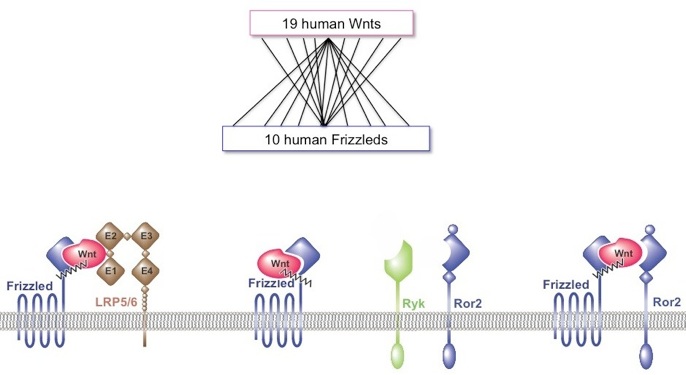
In keeping with the theme of receptor-ligand pleiotropy and cross-reactivity exemplified by the other systems under study in the lab, we are attempting to make inroads into understanding the molecular basis of signaling in the Wnt/Frizzled system. During development, Wnts have diverse roles in governing cell fate, proliferation, migration, polarity, and death. In adults, Wnts function in homeostasis, cell fate determination and stem/progenitor self-renewal, and inappropriate activation of the Wnt pathway is implicated in a variety of cancers. Mammals encode 20 Wnts and 10 Frizzled receptors, yet the nature of Wnt/Fz specificity and its importance in function remains an elusive question. Furthermore, Wnts can signal through a variety of receptors, in addition to Wnt, such as Lrp5/6, Ror, and Ryk to generate canonical (beta-catenin) or non-canonical downstream signals. While the intracellular signaling modules and their interactions have been well characterized, the nature of the extracellular structures and their interactions has remained almost a complete mystery. We are endeavoring to obtain a better structural understanding of how Wnts engage their receptors, with the hopes that we can then utilize this information to carry out ‘high resolution’ functional studies aimed at gleaning the role of specific Wnt/Fz pairs in different diseases, and to perhaps harness this system for therapeutic applications in regenerative medicine.